Can I Offer You a Nice Egg in This Trying Time?
Work with people in times of org change
Dr. Sasha Göbbels
Overview
- About me
- Some remarks
- Introduction
- Technical change
- Growing, changing and shrinking the org
- General tips
- Psychology of Change
- Q & A
- References
About me
|

|

Some remarks
|
Attention: some of the following items may disturb you! |
- Manager or managing is a short hand form of "working with a team".
- I don't manage, I work with people. You manage things, not people.
- The basis of working with people is trust. Trust is bidirectional.
- If you have to resort to your title as a manager, you have lost. Reputation and trust.
Introduction

(It's Always Sunny In Philadelphia)
Types of change
- Technology changing in the org
-
Changing the organizational structure
- Growing the org
- Moving people around
- Layoffs
Topics involved
- Actual changes
- Stress
- Emotions
Supporting Sciences
- Psychology
- Neuroscience
- Systems theory
Technical change

Björn Frontzek
Sociologist & author |
Power is the privilege of not having to learn. |
- Technical change is ubiquitous and permanent.
- There are tech changes that are perceived as a threat.
- Underrepresented groups are often affected disproportionately by anxiety.
- Hence, technical change never is purely technical. It's not like just changing a tool.
AI Skill Threat
| Critical Factors | Countermeasures |
|---|---|
|
|
Opportunity Gaps for Minorities
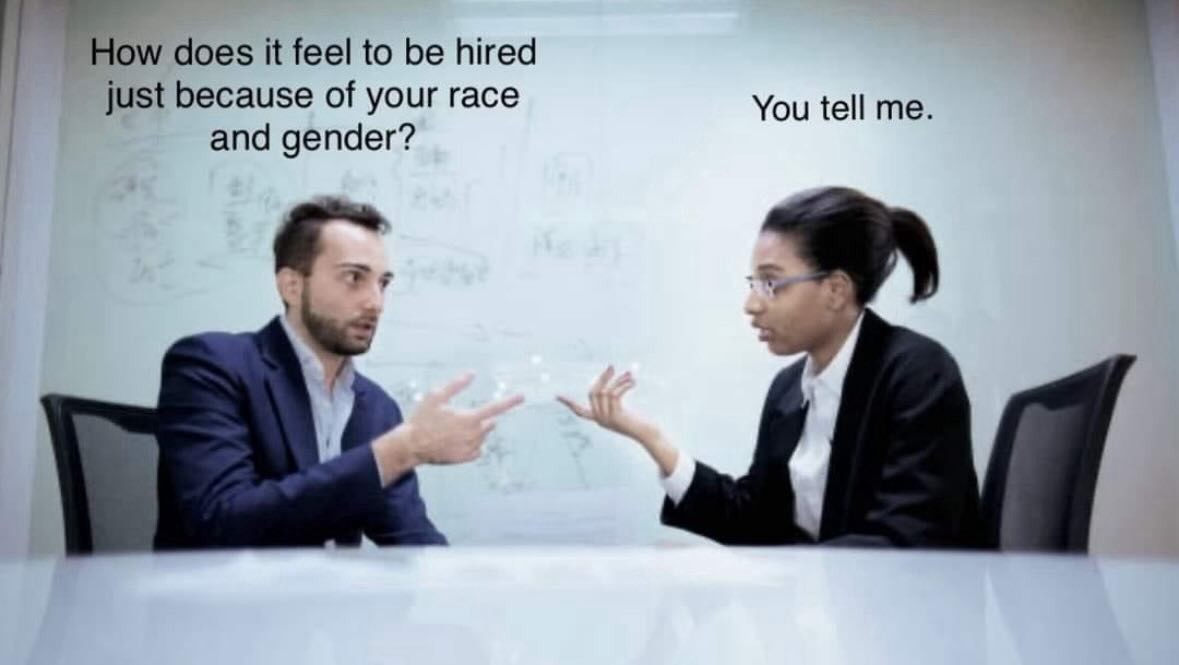
Racial minorities, women and members of the LGBTQIA+ community:- Rated the output quality of AI significantly lower.
- Less likely to plan upskilling for AI-assisted workflows.
Growing the org
Principles
- Adding people to a team makes it slower.
- The team culture will change.
- Don't expect the new hire to "just run with the pack".
- Treat their experience during the first weeks/months as an insight from an "external consultant".
- Parts of the org will be in different phases.
What to do [scaling]
- Adjust expectations on performance. Inside the team and from stakeholders.
- Remember: getting up to speed in a complex project can take up to six months.
- Have a really good onboarding process. Hint: that takes several weeks.
What to do [onboarding]
- Part of the onboarding should be a "get to know each other" meeting, or several of those.
- Connect the new hires with senior leadership.
- Find an onboarding buddy for the new engineer.
-
Have an onboarding process:
- Onboarding checklist
- 30/60/90 day plan
- 90 day retro
Moving people around

Casey Stengel
Baseball player & manager |
The key to being a good manager is keeping the people who hate me away from those who are still undecided. |
Principles
- Starting to work with people you don't know (well) and who don't know you (well) requires building up trust.
- Expect some disorientation.
- Don't do reorgs too often.
- Have reasons for the reorg. Good reasons everyone can understand.
What to do
- Have an introductory "get to know each other" session.
- Make sure to explain what people can and can not expect from you.
- Build up trust by actions, not words. If you don't trust them, they will not trust you.
- If you're actively involved in the planning: ask people before moving them around.
Laying people off

Ben Horowitz
Businessman & author |
Most companies that go through layoffs are never the same. They don't recover because trust is broken. And if you're not honest at the point where you're breaking trust anyway, you will never recover. |
Principles
- Most of the time a layoff is not your own idea.
- People will be mad at you. The ones who have to go and the ones who stay.
- This is stress for you, because it probably goes against your personal values.
What to do [1/2]
- Don't blame others, but don't defend what is not defendable.
- Be kind to yourself.
- Maybe ask for an outplacement agency to be involved.
- Provide useful letters of recommendation.
- Avoid "You've been made redundant".
What to do [2/2]
- Provide an extranet with resources that will be unreachable once people have left.
-
Process of communication:
- Talk to the person affected.
- Agree with them on how to proceed.
- Common sequence: direct team, department, company
Some general tips

Katharina Lotter
Business lawyer & journalist |
Authenticity is always seen as a hugely positive quality, but I’ll be honest, there are people I actually prefer to be inauthentic. |
- Listen!
- Be available.
- Be transparent and authentic.
- Some people like change, some don't.
- Have empathy.
- Know a bit of psychology.
The Psychology of Change
Amygdala hijack
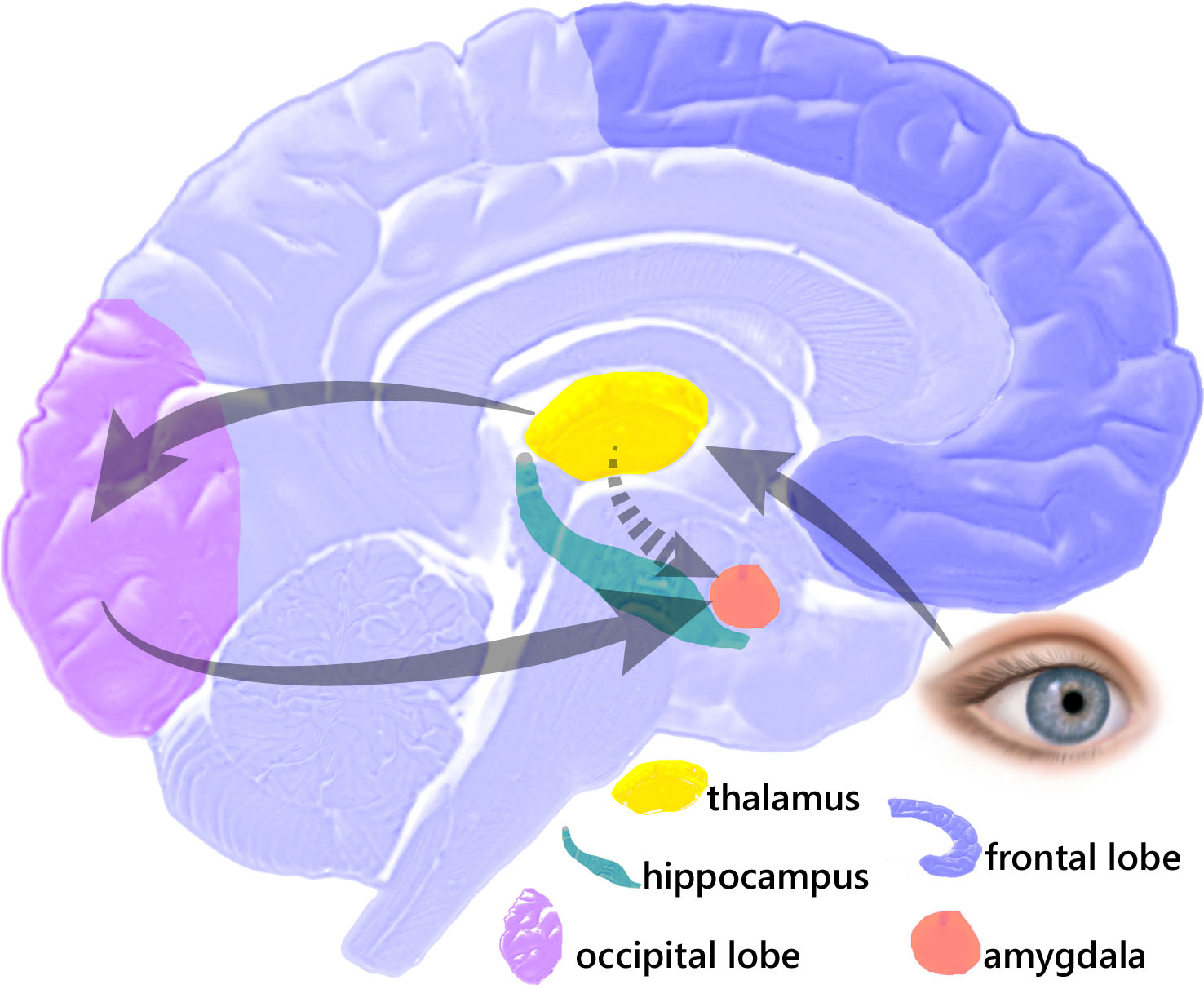
https://commons.wikimedia.org/wiki/File:EQbrain_optical_stim_en.jpg
Mirroring & Body Language
- Your body language will determine, how you are perceived.
- There is a high likelihood that a person mirrors what they perceive from others.
- So if you seem to be upset (by something personal), the other person might seem like they are upset too.
- Mirroring someone's bodylanguage creates rapport.
Thermometer vs. Thermostat
- If you are on a constant lookout for signals from your colleagues, you function as a thermometer.
- The vibes your colleague gives off work like a thermostat, setting the temperature of the room.
- As soon as you notice the temperature changing, you can function as a thermostat too.

Image by Vexels
Thank you!
Questions or Additions?

References
- Wikipedia: Amygdala hijack
- Lara Hogan: Be a thermostat, not a thermometer
- Dr. Cat Hicks, "AI Skill Threat: How the Structure of Developers’ Beliefs about Software Development Ability Impacts Their Psychological Resilience During Rapid Technology Shift"
- Sally Lait, "Leading through challenging times"
- Will Larson, "An Elegant Puzzle: Systems of Engineering Management"